

What You Get in Your Free CIBIL Score & Credit Report
Access your free CIBIL Score and detailed credit report to better understand your credit health and financial profile.
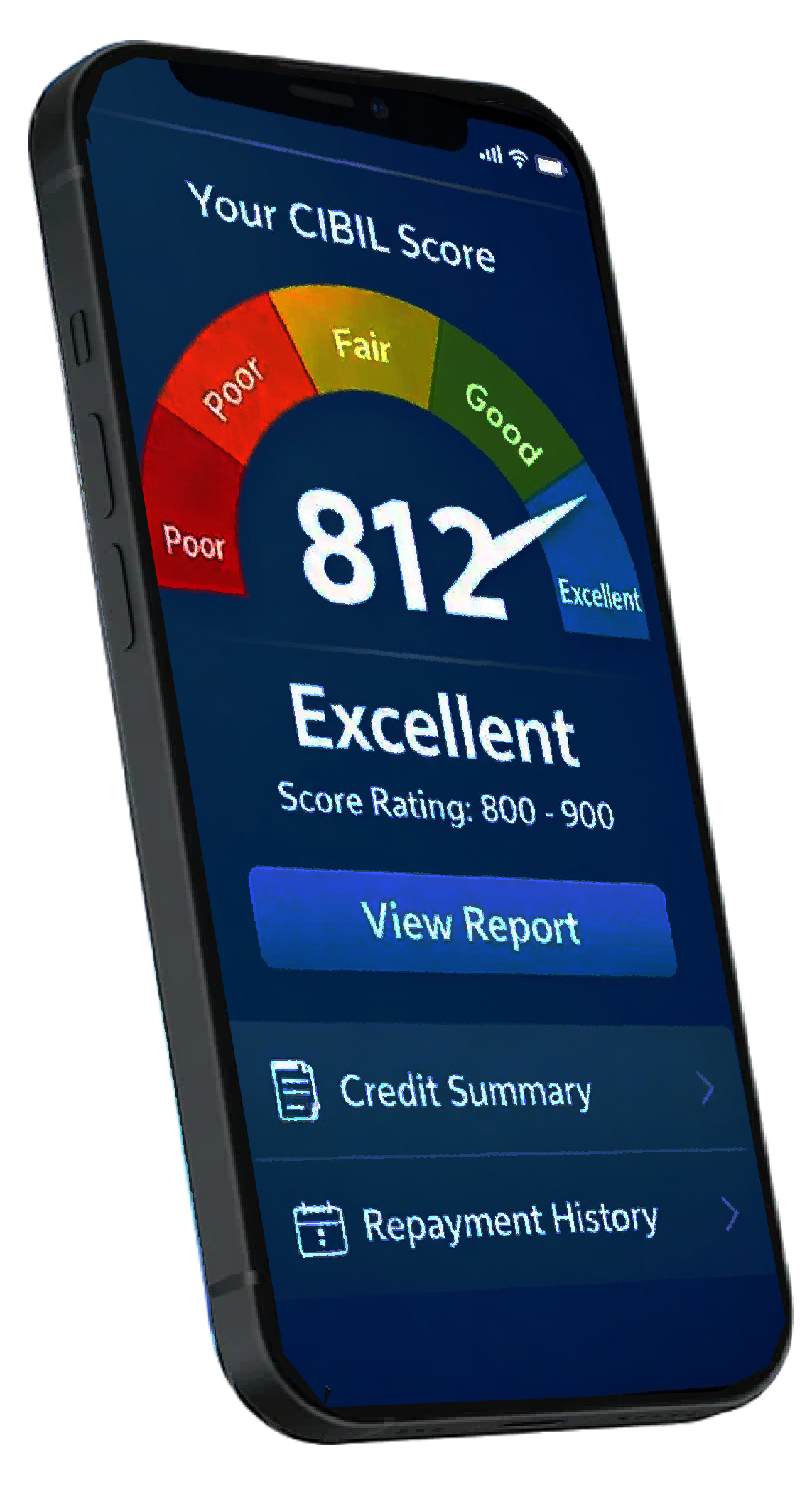
Your most recent 3-digit CIBIL Score, ranging from 300 to 900, that reflects your creditworthiness and overall credit profile.
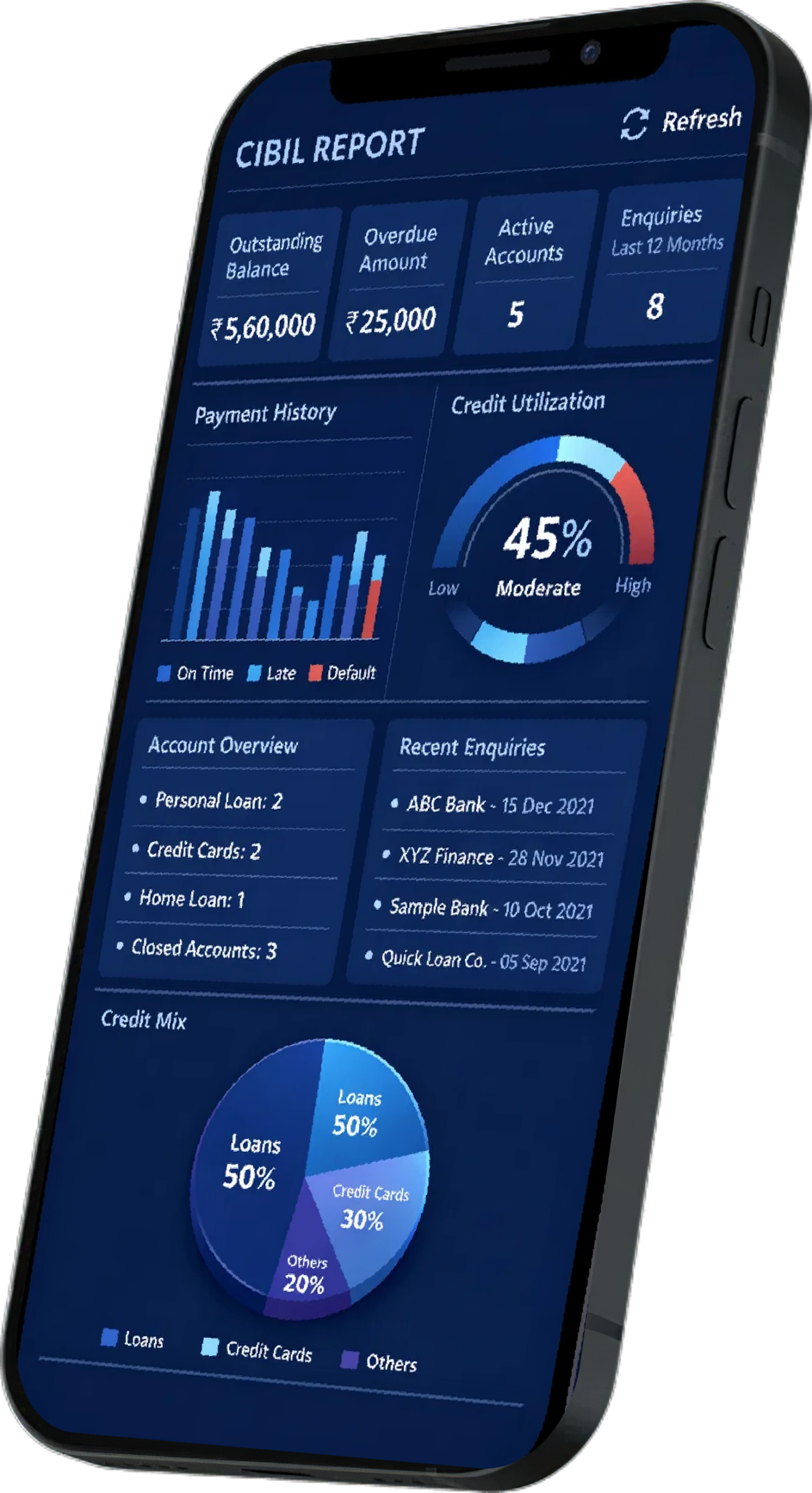
A comprehensive summary of your credit repayment history, based on data submitted by banks and financial institutions.
Key personal details such as your name, date of birth, and gender, as recorded against your loans and credit card accounts.
A complete list of all loan and credit card enquiries made by lenders over the past 36 months.
Detailed information on all your active and closed loan accounts and credit cards, including account status and credit limits.
CIBIL Score & Credit Report – Complete Guide
What is a CIBIL Report (Credit Information Report)?
A CIBIL Report, also known as a Credit Information Report (CIR), is a detailed record of your financial and credit history. It is compiled using information submitted by banks and financial institutions.
Your CIBIL Report includes:
- Credit enquiries made by lenders
- Details of open and closed loan and credit card accounts
- Personal and employment information
- Complete repayment and payment history
This report helps lenders evaluate your creditworthiness when you apply for loans or credit cards.
What Factors Impact Your CIBIL Score & CIBIL Report?
Your CIBIL Score is calculated based on four major factors:
1. Payment History
Your payment history reflects how consistently you pay your EMIs and credit card bills on time and in full.
- Late payments
- Missed EMIs
- Loan defaults or delinquencies
These can negatively impact your CIBIL Score.
2. Credit Utilization Ratio
Credit utilization refers to the percentage of your available credit that you are currently using. A high credit utilization ratio indicates higher dependency on credit and may signal risk to lenders. For a healthy credit profile, it is recommended to keep your credit utilization low.
3. Age of Credit History
This refers to how long you have maintained credit accounts such as loans and credit cards. A longer credit history demonstrates responsible credit behavior over time and is generally viewed positively by lenders.
4. Credit Enquiries
Whenever you apply for a new loan or credit card, lenders check your CIBIL Report. These checks are recorded as credit enquiries. While a single enquiry has minimal impact, multiple loan applications within a short period can lower your CIBIL Score.
How Often Should You Check Your CIBIL Score?
It is recommended to check your CIBIL Score at least once every month to:
- Monitor your credit health
- Detect errors in your credit report
- Identify potential fraud or identity theft
Checking your own CIBIL Score does not affect it.
As per RBI guidelines, you are entitled to one free CIBIL Score and Report every calendar year.
How Can You Improve Your CIBIL Score?
Improving your CIBIL Score requires consistent financial discipline. Key steps include:
- Pay EMIs and credit card bills on time
- Maintain a low credit utilization ratio
- Avoid applying for multiple loans within a short period
- Regularly review your CIBIL Report for discrepancies
Consumers are not required to pay any fee for improving their CIBIL Score, correcting report errors, or updating credit information.
Maintaining a strong CIBIL Score increases your chances of faster loan approvals, better interest rates, and improved financial credibility.